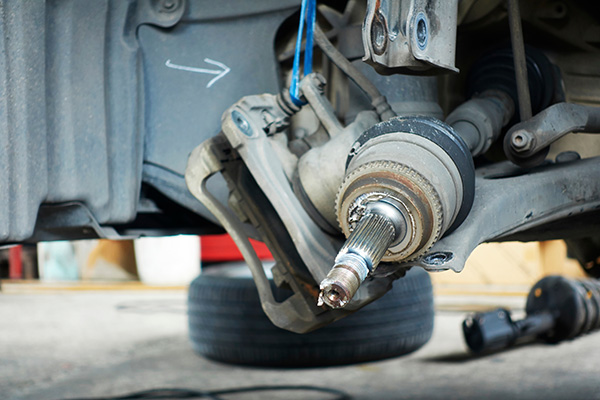
CV axles do not usually fail without warning. In most cases, they give off clear signs that something is starting to wear out. The challenge is that those signs can seem minor at first, making them easy to ignore until the problem worsens.
Since CV axles are responsible for transferring power to your wheels while allowing movement, any issue here can affect how your car drives. Paying attention early can help you avoid a breakdown.
1) Clicking Noise When Turning
A clicking sound during turns is one of the most recognizable signs. It often shows up when making sharp turns at low speeds, like in a parking lot.
That noise usually comes from a worn CV joint that is no longer moving smoothly. As the joint wears, the internal components lose their tight fit and begin to click under pressure.
2) Grease Around the Inside of the Wheel
CV joints are protected by rubber boots filled with grease when the boot cracks or tears, grease leaks out and spreads around the wheel area.
You might notice dark grease splattered along the inside of the wheel or nearby suspension parts. Once that grease is gone, the joint begins to wear much faster.
3) Vibration During Acceleration
A worn CV axle can cause noticeable vibration when accelerating. It may feel like a slight shake that increases with speed or under load.
This happens because the axle is no longer rotating evenly. That imbalance is transmitted through the drivetrain into the vehicle.
4) Clunking Sound When Shifting or Accelerating
A clunking noise when shifting gears or pressing the gas can point to excessive play in the CV joint. It may feel like a small jolt as power is applied.
That looseness develops as internal components wear down. Over time, the sound tends to become more frequent and more noticeable.
5) Torn or Damaged CV Boot
Even if you do not yet hear any noise, a damaged CV boot is a warning sign. The boot keeps dirt out and grease in. Once it fails, the joint is exposed.
Driving with a torn boot allows contaminants to enter, accelerating wear. Catching this early can sometimes prevent the need for a full axle replacement.
6) Loss of Power to the Wheels
In more advanced cases, a failing CV axle can affect how power is transmitted to the wheels. You might feel hesitation or reduced response when accelerating.
If the axle fails, the vehicle may not move at all. This is less common but shows why early signs should not be ignored.
Why CV Axle Problems Get Worse Over Time
Once a CV joint starts to wear, it does not improve on its own. The lack of lubrication and added stress continue to damage internal components.
What begins as a small noise or vibration can turn into a more serious drivability issue. Addressing it early helps avoid a complete failure.
How Regular Maintenance Helps Catch Early Signs
During regular maintenance, technicians can inspect CV boots for cracks, check for grease leaks, and listen for unusual noises. These simple checks can reveal early wear.
An inspection helps identify whether the issue is limited to the boot or if the axle itself is already affected.
When to Schedule a CV Axle Inspection
If you notice clicking during turns, vibration while driving, or grease around your wheels, it is time to have your vehicle inspected.
Even if the symptoms seem mild, they point to wear that will continue to develop. Early attention helps keep repairs more manageable.
Get CV Axle Repair In North Hollywood, CA, With North Hollywood Auto Repair
If your vehicle is showing signs of a bad CV axle or joint, North Hollywood Auto Repair in North Hollywood, CA, can inspect the issue and recommend the right repair before it leads to more serious problems.
Call today to schedule your appointment and keep your vehicle driving safely and reliably.