You slam the brake pedal in a panic stop, feel a rapid pulsing under your foot, and hear a faint buzzing sound. For a second, it may feel strange, but that pulse is your brake system working hard to keep the wheels from locking and to help you stay in control. That is the anti-lock braking system doing exactly what it was designed to do.
What ABS Actually Does When You Hit the Brakes
ABS is there to prevent your wheels from locking up during hard braking. When a wheel locks, it skids across the road surface instead of rolling, which kills most of your steering control and often increases stopping distance on many surfaces. With ABS, the system senses when a wheel is about to lock and quickly reduces and reapplies brake pressure several times a second.
From the driver’s seat, that feels like a fast vibration or pulsing in the pedal during a hard stop. You may also hear a humming or buzzing sound as the hydraulic unit works. The idea is simple: keep the tires right at the edge of traction so you can brake hard and still steer around an obstacle instead of sliding straight into it.
Main Components That Make ABS Work
Even though it feels simple, ABS is a blend of electronics and hydraulics working together. The main parts include:
- Wheel speed sensors at each wheel, which constantly measure how fast each wheel is turning
- A hydraulic control unit with valves and a pump, which can quickly adjust brake pressure to individual wheels
- An ABS control module, which reads sensor data and decides when to step in during braking
When everything is healthy, you never notice these parts doing their job until you really need them. When one piece starts to fail, the system usually lets you know with a warning light.
How ABS Helps You Steer During an Emergency Stop
The biggest advantage of ABS is not just stopping shorter in a straight line, but also the ability to steer while braking hard. With the wheels still rolling, the tires can still grip the road sideways as well as forward. That gives you a chance to brake and steer around a hazard instead of sliding straight ahead with locked wheels.
On wet or slippery roads, this makes a big difference. We have seen plenty of situations where drivers were able to avoid a collision because the system kept the tires rolling just enough for them to steer away while staying on the brakes. Without ABS, those same brake pedal instincts might have locked the wheels and taken away that steering ability.
Common ABS Warning Signs You Should Not Ignore
When ABS has a problem, it does not usually shut your normal brakes off. The basic braking system still works, but the extra protection from wheel lock is reduced or lost. That is why paying attention to warning signs matters.
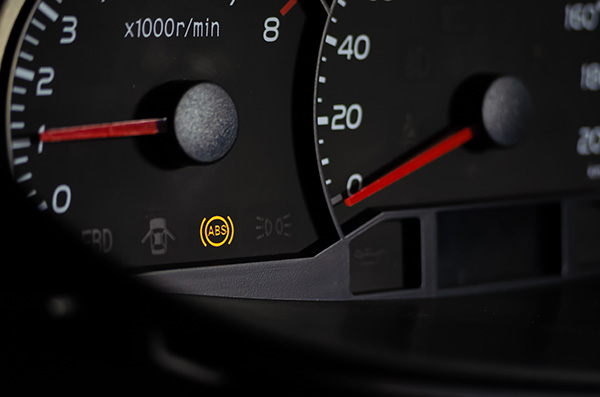
You might see an amber ABS light stay on after start-up or come on while driving. In some vehicles, the traction control or stability control light may also appear, since they share sensors and components with ABS. In certain cases, you may notice the system engaging at very low speeds on dry roads, which can point to a sensor or tone ring issue. When we see any of these signs, we hook up a scan tool and look at wheel speed data to find out which part is causing trouble.
How Your Driving Habits Affect ABS Performance
Good habits help ABS do its job properly. Keeping tires in decent shape with proper tread depth and correct air pressure gives the system more grip to work with. If the tires are worn, mismatched, or underinflated, ABS cannot create traction that is not there.
Avoid ignoring brake issues like pulsation, grinding, or pulling. Problems with rotors, pads, or hydraulic components can change how the system behaves in an emergency. We also see corrosion and dirt build-up around wheel speed sensors on some vehicles, especially where there is a lot of rain or road grit. Regular inspections make it easier to catch that before it turns into a warning light.
What Happens During an ABS Inspection and Repair
When we inspect an ABS concern, we start with a test drive and a scan of the control module for stored trouble codes. Those codes point us toward a specific sensor, circuit, or part of the hydraulic unit that needs more attention. From there, our technicians check wiring, connectors, and sensor mounting, and on many vehicles, they inspect the tone rings or hub assemblies that the sensors read.
Repairs can be as straightforward as replacing a failed wheel speed sensor or as involved as dealing with a faulty hydraulic control unit. The goal is always the same: restore the system so it can step in during hard stops, while keeping your regular braking feel normal in everyday driving.
Get ABS Brake Service in North Hollywood, CA with North Hollywood Auto Repair
If your ABS light is on, you feel strange behavior during braking, or you just want to know your safety systems are ready for an emergency stop, it is worth having the system checked. We can diagnose warning lights, verify sensor operation, and repair the components needed to get your ABS working the way it should.
Schedule ABS brake service in North Hollywood, CA with North Hollywood Auto Repair, and we will help keep your stops controlled, stable, and safer.