Weak A/C has a sneaky way of lowering your standards. At first, the vents still feel cool enough. Then the cabin takes longer to cool down. A few hot afternoons later, you are driving with the fan on high, wondering why the air feels only slightly better than the outside air.
That small change may be the start of a refrigerant leak.
AC maintenance is usually simple when the system is still healthy. Once refrigerant starts escaping, the problem can move from routine service to real AC repair, especially if the compressor has been running low for too long.
Refrigerant Should Stay Inside The System
Your car’s A/C system is sealed. Refrigerant moves through the compressor, condenser, expansion valve, orifice tube, evaporator, hoses, and lines. It changes pressure as it moves, which helps remove heat from the cabin.
Refrigerant is not used up like fuel. If the system is low, it may have escaped somewhere, or it was not charged correctly during a previous service.
A little loss can make the air warmer. A bigger loss can prevent the compressor from operating correctly. The key is finding out why the level dropped instead of simply adding refrigerant and hoping the cold air lasts.
Small Leaks Do Not Always Leave Obvious Clues
Drivers often expect an A/C leak to leave a puddle, but refrigerant usually escapes as a gas. You may not see anything under the car. Some leaks leave a light oily film because refrigerant carries oil through the system, but even that can be hard to spot.
Leaks can happen at O-rings, hose crimps, service ports, condenser seams, compressor seals, or the evaporator inside the dashboard. A condenser can be damaged by road debris. An evaporator leak can go undetected during a driveway check.
That is why an inspection is needed when the A/C keeps losing performance. No visible leak does not mean the system is sealed.
Why A Recharge Alone May Not Fix It
A recharge can restore the A/C to cold if the system is low, but it does not repair the leak. If refrigerant escaped once, it will escape again. That is why some vehicles cool well for a few days or weeks, then return to blowing warm air.
There is another risk. Adding refrigerant without measuring the correct charge can create pressure problems. Too much refrigerant can reduce cooling and put more strain on system parts.
Professional service uses the correct charge amount and checks pressure readings, vent temperature, compressor operation, and leak signs. The goal is to repair the reason the system got low, not just refill it for a short time.
Low Refrigerant Can Hurt The Compressor
The compressor is one of the most expensive parts of the A/C system. It moves refrigerant and oil through the system. When the refrigerant is low, oil movement can suffer, and the compressor may run hotter than it should.
A compressor that runs with poor lubrication can become noisy, weak, or damaged internally. If it fails and sends debris through the system, the repair can grow quickly. Lines, condensers, expansion parts, and other components may need attention depending on the damage.
This is how a small refrigerant leak turns into an AC repair that costs much more than early leak detection would have.
Weak Cooling Is Usually The First Warning
A refrigerant leak usually announces itself through performance. The air may feel cool, but not cold. The A/C may work better on the highway than at idle. It may take too long to cool the cabin after parking in the sun.
Some vehicles may also cycle the compressor on and off more often than normal. Others may stop cooling once pressure drops below a safe range. You might hear a clicking sound as the system tries to engage, then shuts back off.
These symptoms can also be caused by a fan issue, airflow restriction, an electrical fault, or a blend door problem. Testing separates those causes before parts are replaced.
How Shops Find The Leak
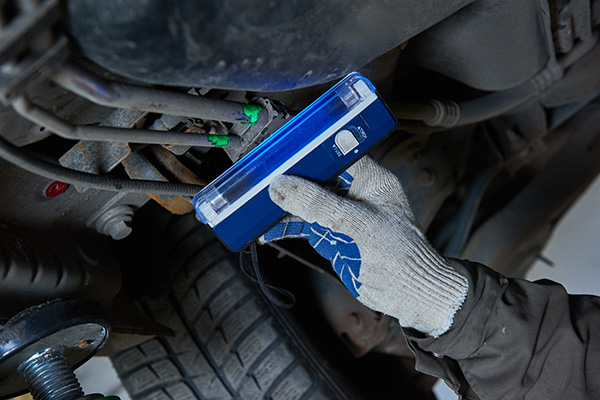
Finding a refrigerant leak takes more than looking under the hood. Technicians may use UV dye, an electronic leak detector, pressure testing, nitrogen testing, or a careful visual inspection, depending on the system and symptoms.
A fast leak may show itself quickly. A slow leak may need dye and a follow-up check after normal driving. Evaporator leaks may require testing at the vents, as the leaking component is hidden inside the HVAC case.
During regular maintenance, vent temperature, cabin filter condition, condenser condition, and visible A/C parts can be checked before the system becomes empty. Small changes are easier to handle while the compressor is still healthy.
Get AC Leak Repair In North Hollywood, CA, With North Hollywood Auto Repair
If your A/C is losing refrigerant, blowing warm air, cooling slowly, or needing repeat recharges, North Hollywood Auto Repair in North Hollywood, CA, can test the system and find the leak before it damages more expensive parts.
Schedule a visit and get the A/C checked before a simple maintenance concern turns into a bigger repair.